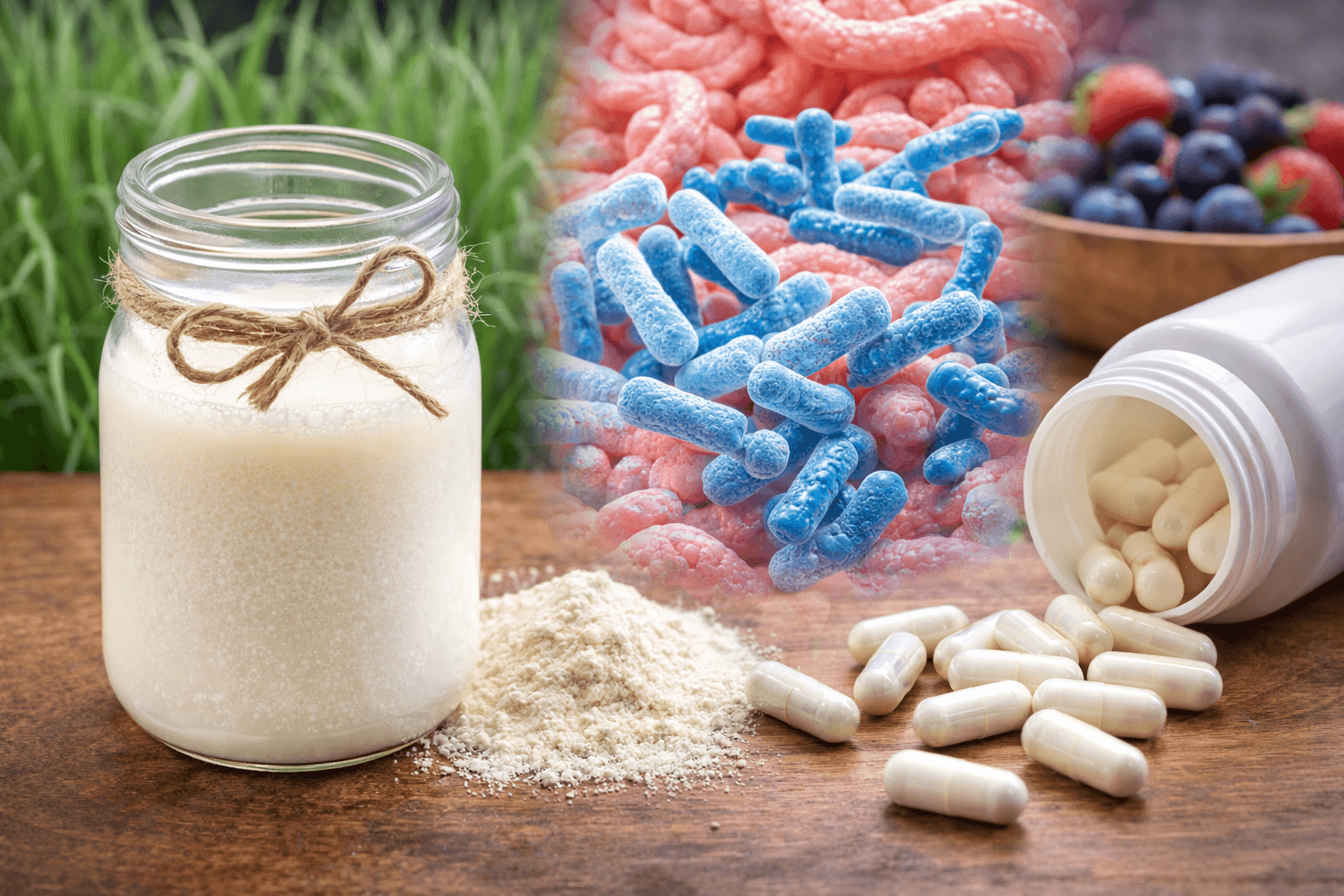
Go Beyond Probiotics With Full-Spectrum Colostrum
First-milking, never fractionated whole colostrum with 400+ bioactive nutrients — from USDA Grade A grass-fed dairies.
When it comes to supporting digestive health, two popular supplements often come up:colostrum and probiotics. While both can benefit your gut, they work in fundamentally different ways and offer distinct advantages.
In this comprehensive comparison, we'll explore how colostrum and probiotics support gut health, examine their unique mechanisms of action, and help you determine which approach—or combination— is best suited to your individual needs.
Understanding the Basics
What Are Probiotics?
Probiotics are live microorganisms (primarily bacteria and some yeasts) that, when consumed in adequate amounts, confer health benefits. They work by:
- Directly adding beneficial bacteria to your gut microbiome
- Competing with harmful bacteria for resources and space
- Producing beneficial compounds like short-chain fatty acids
- Supporting immune function through microbiome interactions
What Is Colostrum?
Bovine colostrum is the first milk produced by cows after giving birth, rich in bioactive compounds including immunoglobulins, growth factors, and antimicrobial proteins. It works by:
- Supporting and repairing the intestinal barrier (gut lining)
- Providing passive immune defense against pathogens
- Promoting tissue regeneration through growth factors
- Creating an environment that supports beneficial bacteria
Side-by-Side Comparison
Colostrum: Strengths and Considerations
✓ Advantages of Colostrum
- Gut Barrier Repair: Growth factors directly support intestinal lining regeneration
- Immediate Immune Support: Immunoglobulins provide ready-made antibodies
- Comprehensive Action: Multiple bioactive compounds work synergistically
- Stable Formula: Doesn't require special storage or refrigeration
- Athletic Benefits: Reduces exercise-induced gut permeability
- Research-Backed: Extensive studies on gut health and immune function
⚠ Considerations for Colostrum
- Dairy Source: Not suitable for those with severe milk protein allergies
- Quality Variation: Effectiveness depends on processing and source quality
- Cost: Premium colostrum can be more expensive than basic probiotics
- Dosage: Requires consistent use for sustained benefits
Probiotics: Strengths and Considerations
✓ Advantages of Probiotics
- Microbiome Diversity: Directly increases beneficial bacteria populations
- Strain Specificity: Can target specific health concerns with particular strains
- Post-Antibiotic Recovery: Helps restore gut bacteria after medication
- Metabolite Production: Beneficial bacteria produce vitamins and SCFAs
- Wide Availability: Many food sources (yogurt, kefir, sauerkraut)
- Extensive Research: Well-studied for various health conditions
⚠ Considerations for Probiotics
- Survivability Issues: Many strains die before reaching the colon
- Temporary Colonization: Most probiotic strains don't permanently colonize
- Storage Requirements: Many require refrigeration to maintain viability
- Individual Variation: Effectiveness varies significantly between individuals
- Strain Confusion: Different strains have different effects; choosing can be complex
- Initial Digestive Upset: Some people experience bloating or gas initially
Different Goals, Different Approaches
Choose Colostrum When You Need:
- Gut Barrier Repair: Addressing "leaky gut" or intestinal permeability
- Athletic Recovery: Supporting gut health during intense training
- Immune System Support: Passive immunity through antibodies
- Post-Inflammatory Recovery: Healing gut tissue after inflammation
- Travel Protection: Immune defense in new environments
- Comprehensive Gut Support: Multiple mechanisms of action
Choose Probiotics When You Need:
- Post-Antibiotic Recovery: Restoring depleted gut bacteria
- Microbiome Diversity: Increasing beneficial bacteria populations
- Specific Digestive Issues: Targeting particular strains for IBS, constipation, etc.
- Dietary Probiotic Support: Complementing fermented food intake
- Vaginal Health: Specific strains support urogenital health
- Mental Wellness: Gut-brain axis support through specific psychobiotic strains
The Synergistic Approach: Combining Both
Here's where it gets interesting: colostrum and probiotics can work beautifully together. Rather than choosing one or the other, many people find optimal gut health by combining both approaches.
Why Combination Works
- Foundation + Population: Colostrum repairs the gut lining, creating a healthy environment where probiotics can thrive
- Prebiotic Effect: Oligosaccharides in colostrum act as prebiotics, feeding beneficial bacteria
- Comprehensive Coverage: Address both gut structure (colostrum) and microbiome population (probiotics)
- Enhanced Immune Support: Passive immunity (colostrum) + active microbiome immunity (probiotics)
Pro Tip: Start with colostrum to repair and strengthen your gut lining, then add probiotics to optimize your microbiome. This sequential approach often yields better results than either supplement alone.
The Science: What Research Shows
Studies in the American Journal of Physiology demonstrated that colostrum significantly improved intestinal barrier function and reduced exercise-induced gut permeability by up to 80% in athletes—effects not seen with probiotic supplementation alone.
Meta-analyses published in JAMA show that specific probiotic strains (particularly Lactobacillus and Bifidobacterium species) effectively reduce antibiotic-associated diarrhea and support microbiome recovery after antibiotic treatment.
Emerging research suggests that combining gut barrier support (colostrum) with microbiome optimization (probiotics) may provide superior results for comprehensive digestive health, though more studies are needed in this area.
Practical Recommendations
Scenario 1: Post-Antibiotic Recovery
Best Choice: Probiotics + Colostrum
- Start probiotics immediately to repopulate beneficial bacteria
- Add colostrum to support gut lining recovery
- Continue for 4-8 weeks minimum
Scenario 2: Athletic Performance & Recovery
Best Choice: Colostrum (Primary) + Probiotics (Optional)
- Colostrum addresses exercise-induced gut stress directly
- Take 4-8 grams daily, especially around training
- Add probiotics if digestive issues persist
Scenario 3: General Gut Health & Prevention
Best Choice: Either or Both
- Fermented foods + colostrum for comprehensive support
- Or quality probiotic supplement + whole foods diet
- Focus on consistency over specific choice
Scenario 4: Leaky Gut / Intestinal Permeability
Best Choice: Colostrum (Primary)
- Growth factors directly repair intestinal barrier
- Take on empty stomach for maximum absorption
- Add probiotics once barrier function improves
Scenario 5: Digestive Discomfort (IBS, Bloating)
Best Choice: Start with Probiotics, Add Colostrum
- Begin with specific probiotic strains for your symptoms
- Add colostrum if symptoms persist or for additional support
- Work with healthcare provider for personalized approach
Quality Matters: What to Look For
High-Quality Colostrum
- First-milking collection (within 6 hours)
- Minimum 25-30% immunoglobulin content
- Low-temperature processing
- Grassfed, hormone-free sources
- Third-party tested for purity
TBR Labs Colostrum: Our full-spectrum, first-milking whole colostrum meets all of these criteria—sourced from USDA Grade A grass-fed dairies, gently processed to preserve bioactive compounds, and third-party tested. Available in powder, capsule, and chewable tablet forms.
High-Quality Probiotics
- Multiple well-researched strains
- High CFU count (10-50 billion minimum)
- Delayed-release capsules or acid-resistant strains
- Clearly labeled strain identification
- Third-party tested for viability
- Proper storage maintained (refrigeration if needed)
Conclusion: No Wrong Answer, Just Different Paths
The truth is, both colostrum and probiotics offer valuable benefits for gut health—they just work through different mechanisms. Rather than viewing them as competitors, think of them as complementary tools in your digestive health toolkit.
Colostrum excels at repairing gut barrier function, providing immune support, and offering comprehensive bioactive compounds that support tissue regeneration. It's particularly valuable for athletes, those with compromised gut integrity, or anyone seeking broad-spectrum immune support.
Probiotics shine when it comes to microbiome diversity, post-antibiotic recovery, and targeting specific digestive concerns with particular bacterial strains. They're essential for maintaining a healthy population of beneficial gut bacteria.
For many people, the optimal approach combines both: using colostrum to create a healthy gut environment and probiotics to populate it with beneficial bacteria. This synergistic strategy addresses gut health from multiple angles, providing comprehensive support for digestive wellness and overall health.
Bottom Line: Listen to your body, consider your specific health goals, and don't hesitate to try both approaches to discover what works best for you. Gut health is highly individual, and the "right" choice is the one that supports your unique needs.
Medical Disclaimer
The information provided on this website is for educational and informational purposes only and is not intended as medical advice. These statements have not been evaluated by the Food and Drug Administration. Our products are not intended to diagnose, treat, cure, or prevent any disease. Always consult with a qualified healthcare professional before starting any supplement regimen, especially if you are pregnant, nursing, have a medical condition, or are taking medications.