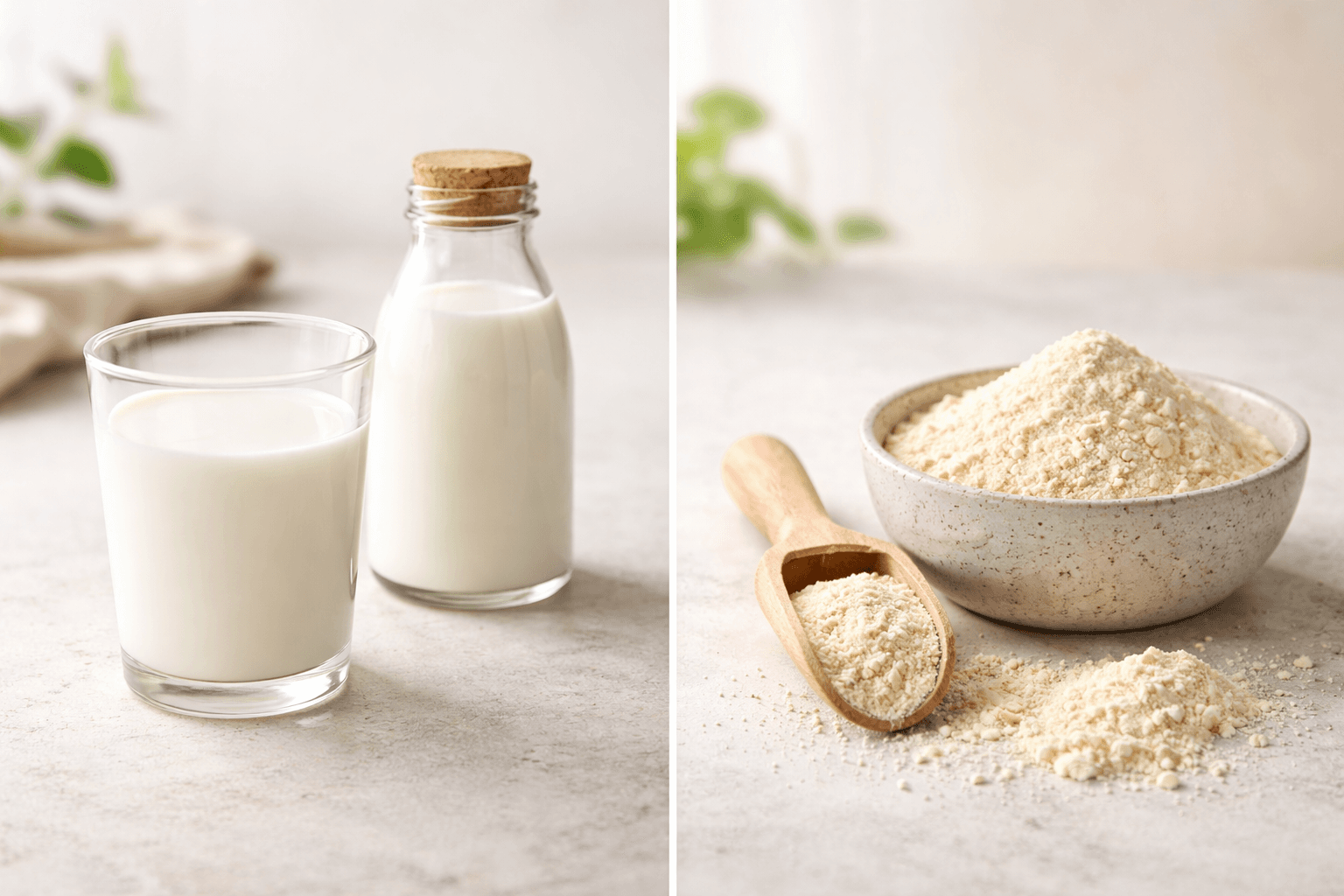
Gentle Enough for Sensitive Stomachs
First-milking, never fractionated whole colostrum with a minimal 3g serving — well-tolerated by most lactose-intolerant individuals.
One of the most common questions we hear is: "I'm lactose intolerant—can I still take colostrum?" It's a fair question. Colostrum comes from cows, which means it's a dairy product. But the answer isn't as simple as "yes" or "no." Understanding the difference between lactose intolerance and dairy allergy—and knowing how colostrum compares to regular milk—can help you make an informed decision.
Lactose Intolerance vs. Dairy Allergy: An Important Distinction
Before diving into colostrum specifically, it's essential to understand the difference between these two commonly confused conditions:
Lactose Intolerance
A digestive condition caused by insufficient production of lactase, the enzyme needed to break down lactose (milk sugar). Symptoms include bloating, gas, cramping, and diarrhea after consuming dairy. This is a sugar-processing issue, not an immune response.
Dairy (Milk) Allergy
An immune-mediated reaction to proteins in cow's milk—primarily casein and whey. Symptoms can range from hives and digestive distress to severe anaphylaxis. This is a protein-processing issue involving the immune system.
This distinction matters because colostrum's lactose content and protein profile are both relevant to determining whether it's appropriate for you.
How Much Lactose Is in Colostrum?
Here's where the science gets interesting. Colostrum contains significantly less lactose than mature milk. Research published in the Journal of Dairy Science has documented that bovine colostrum collected within the first 24 hours contains approximately 2.5–3% lactose, compared to 4.5–5% in mature cow's milk. That's up to 50% less lactose than the glass of milk that might cause you discomfort.
Furthermore, when colostrum is processed into supplement form—whether powder or capsules—the concentration process can further reduce the relative lactose content. A typical serving of colostrum powder (3–10 grams) contains far less lactose than even a small glass of milk. How it's processed matters, too: gentle, low-temperature spray drying preserves the bioactive compounds (like immunoglobulins and lactoferrin) without concentrating the lactose content.
Putting It in Perspective
A standard colostrum serving contains roughly 0.2–0.7g of lactose depending on serving size. For example, TBR Labs' recommended 3g scoop contains approximately 0.2–0.3g of lactose. For comparison, a single cup (240ml) of whole milk contains approximately 12g of lactose—roughly 40–60 times more. Most people with lactose intolerance can tolerate up to 12g of lactose in a single sitting without significant symptoms, making a colostrum serving well within that threshold.
Why Many Lactose-Intolerant People Tolerate Colostrum
Beyond the lower lactose content, several factors contribute to why colostrum is often well-tolerated by people with lactose intolerance:
1. Small Serving Size
Colostrum is taken as a supplement, not consumed by the glass. The small serving sizes mean the total lactose exposure is minimal. Most individuals with lactose intolerance have a threshold—they can handle small amounts of lactose without triggering symptoms. Colostrum servings typically fall well below this threshold.
2. Bioactive Compounds May Support Digestion
Colostrum contains growth factors (including IGF-1 and TGF-β) that have been studied for their role in supporting gut lining integrity. Research suggests these bioactives may help support overall digestive function, which could indirectly benefit people with digestive sensitivities.
3. Different Composition Than Mature Milk
Colostrum is not just "concentrated milk." It has a fundamentally different composition. The ratio of proteins to sugars is heavily skewed toward bioactive proteins (immunoglobulins, lactoferrin, growth factors) rather than lactose. This makes colostrum compositionally distinct from the dairy products that typically cause issues for lactose-intolerant individuals.
This is especially true for full-spectrum, whole colostrum that hasn't been fractionated. Fractionation is a process some manufacturers use to isolate specific components (like IgG), but it strips away many complementary bioactives that work together synergistically. Whole colostrum retains all 400+ naturally occurring bioactive nutrients—including immunoglobulins, lactoferrin, growth factors, and proline-rich polypeptides—in the same ratios nature intended.
When Colostrum May Not Be Appropriate
While many people with lactose intolerance can take colostrum without issues, there are situations where caution is warranted:
- Diagnosed dairy/milk allergy: If you have an IgE-mediated allergy to cow's milk proteins (casein or whey), colostrum contains these proteins and should be avoided. Dairy allergy is an immune response to proteins, not a sugar intolerance, and colostrum is rich in dairy proteins.
- Severe lactose intolerance: While rare, some individuals are extremely sensitive to even trace amounts of lactose. If you react to lactose in medications or processed foods that contain trace dairy, consult your healthcare provider before trying colostrum.
- Galactosemia: This rare genetic condition prevents the body from metabolizing galactose (a component of lactose). People with galactosemia should avoid all dairy products, including colostrum.
Important: Allergy vs. Intolerance
If you are unsure whether you have lactose intolerance or a dairy allergy, consult your healthcare provider for proper testing before trying colostrum. A dairy allergy involves the immune system and can cause severe reactions, while lactose intolerance is a digestive issue. The distinction is critical for your safety.
Tips for Trying Colostrum If You're Lactose Intolerant
If you have lactose intolerance (not a dairy allergy) and want to try colostrum, here are some practical approaches:
- Start with a smaller dose: Begin with half the recommended serving size for the first week. This lets you gauge your body's response with minimal lactose exposure.
- Take it on an empty stomach: Many people find colostrum is best tolerated first thing in the morning on an empty stomach, approximately 30 minutes before eating.
- Consider capsules: If you're concerned about taste or want precise dosing control, capsules offer a convenient alternative to powder with comparable bioactive content. TBR Labs offers both whole colostrum powder and capsules with the same full-spectrum formulation.
- Monitor your response: Keep a simple log for the first 1–2 weeks noting any digestive symptoms. Most people with mild to moderate lactose intolerance report no issues with colostrum servings.
- Consult your healthcare provider: As with any new supplement, discuss with your doctor or dietitian, especially if you have multiple food sensitivities or underlying digestive conditions.
What About Casein and Whey Sensitivity?
Some people experience digestive discomfort from dairy that isn't related to lactose at all—it's a sensitivity to specific milk proteins, particularly A1 beta-casein. Colostrum does contain casein and whey proteins. If you know that you react specifically to these proteins (rather than lactose), colostrum may not be the right fit.
However, it's worth noting that colostrum's protein profile differs from mature milk. The concentration of immunoglobulins, lactoferrin, and other bioactive proteins is much higher relative to casein. Some individuals who are sensitive to regular dairy proteins report tolerating colostrum—but this is anecdotal, and individual responses vary.
What to Look for in a Colostrum Supplement
If you're lactose intolerant and shopping for colostrum, not all supplements are created equal. Here's what matters:
- Full-spectrum, whole colostrum: Look for colostrum that hasn't been fractionated or stripped of its natural components. Full-spectrum products retain the complete bioactive profile—over 400+ nutrients—that makes colostrum distinct from regular dairy.
- First-milking sourced: Colostrum collected from the very first milking has the highest concentration of immunoglobulins and growth factors, and the lowest lactose content compared to transition milk collected in subsequent milkings.
- Low-temperature processing: Heat can denature the delicate bioactive proteins that give colostrum its unique properties. Gentle, low-temperature spray drying preserves these compounds.
- Grass-fed, hormone-free source: Colostrum from pasture-raised, grass-fed cows that are antibiotic-free and hormone-free ensures a cleaner product.
TBR Labs Full-Spectrum Colostrum
TBR Labs colostrum checks all of these boxes. Our products are full-spectrum, first-milking, whole colostrum from USDA Grade A grass-fed dairies, processed with gentle low-temperature spray drying. They're never fractionated, antibiotic-free, hormone-free, keto-friendly, and available in powder, capsule, and chewable tablet forms to suit your preference and lifestyle.
The Bottom Line
For the majority of people with lactose intolerance, colostrum is generally well-tolerated due to its significantly lower lactose content compared to milk and the small serving sizes used in supplementation. The minimal lactose in a typical colostrum serving falls well below the threshold that triggers symptoms in most lactose-intolerant individuals.
However, colostrum is not appropriate for people with a diagnosed dairy/milk protein allergy. Colostrum contains cow's milk proteins including casein and whey, which can trigger allergic reactions in sensitized individuals.
If you're unsure about your specific situation, the best approach is always to consult with your healthcare provider. They can help determine whether your dairy sensitivity is lactose-based (often compatible with colostrum) or protein-based (not compatible with colostrum) and advise you accordingly.
Medical Disclaimer
The information provided on this website is for educational and informational purposes only and is not intended as medical advice. These statements have not been evaluated by the Food and Drug Administration. Our products are not intended to diagnose, treat, cure, or prevent any disease. Always consult with a qualified healthcare professional before starting any supplement regimen, especially if you are pregnant, nursing, have a medical condition, or are taking medications.
References & Scientific Sources
- Playford RJ, et al. "Bovine colostrum is a health food supplement which prevents NSAID induced gut damage."Gut. 1999;44(5):653-658.https://doi.org/10.1136/gut.44.5.653
- Rathe M, et al. "Clinical applications of bovine colostrum therapy: a systematic review."Nutrition Reviews. 2014;72(4):237-254.https://doi.org/10.1111/nure.12089
- McGrath BA, et al. "Composition and properties of bovine colostrum: a review."Dairy Science & Technology. 2016;96(2):133-158.https://doi.org/10.1007/s13594-015-0258-x
- Bagwe S, et al. "Bovine colostrum: an emerging nutraceutical."Journal of Complementary and Integrative Medicine. 2015;12(3):175-185.https://doi.org/10.1515/jcim-2014-0039
- Kehoe SI, et al. "A survey of bovine colostrum composition and colostrum management practices on Pennsylvania dairy farms."Journal of Dairy Science. 2007;90(9):4108-4116.https://doi.org/10.3168/jds.2007-0040
- Misselwitz B, et al. "Update on lactose malabsorption and intolerance: pathogenesis, diagnosis and clinical management."Gut. 2019;68(11):2080-2091.https://doi.org/10.1136/gutjnl-2019-318404