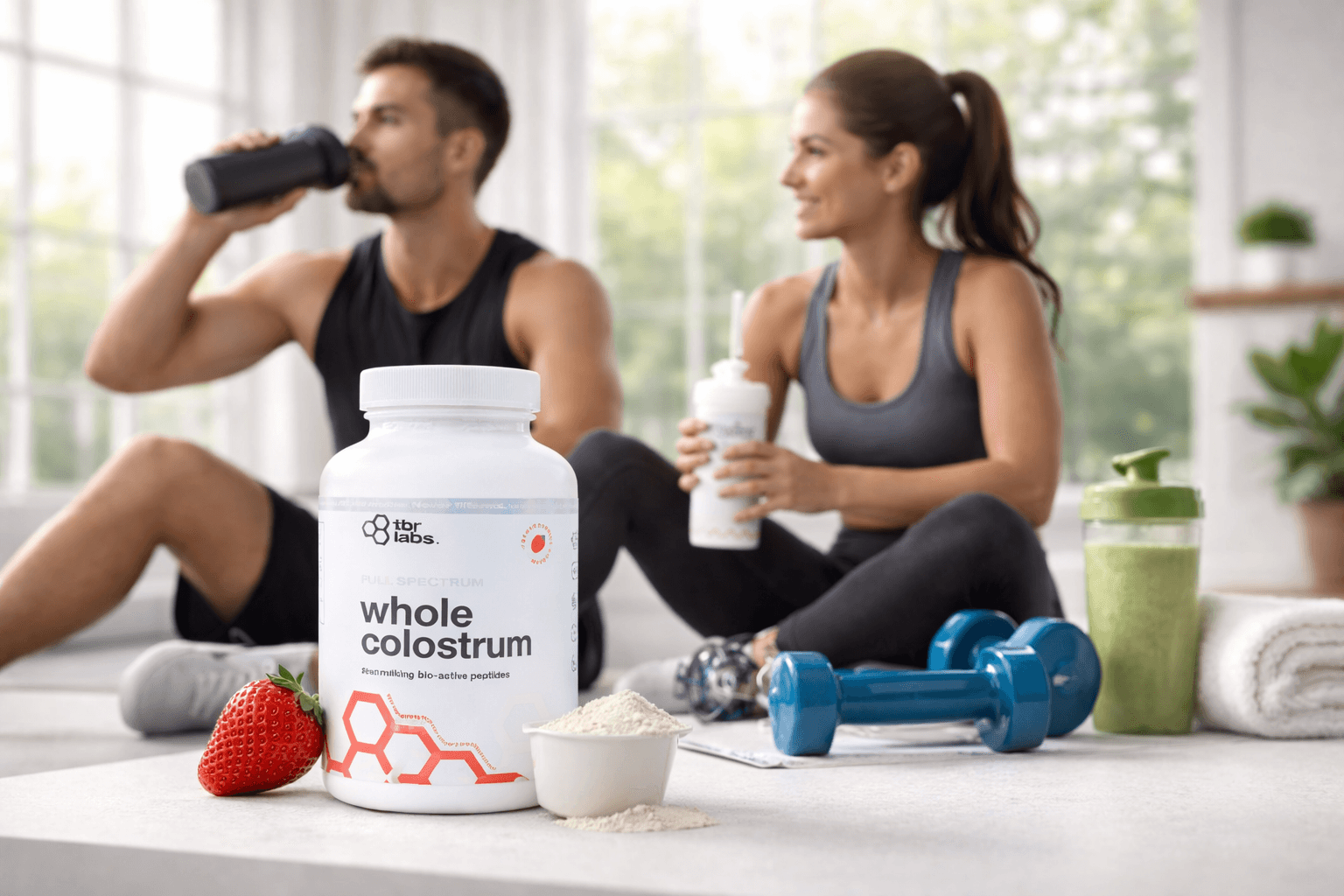
Fuel Recovery With Full-Spectrum Colostrum
First-milking, never fractionated whole colostrum with 400+ bioactive nutrients — from USDA Grade A grass-fed dairies.
Training hard is non-negotiable for athletic progress. But there's an often-overlooked biological reality: your performance gains happen during recovery, not during the workout itself. The stress you place on your body during training creates microscopic damage and metabolic disruption. How efficiently you repair that damage determines whether you adapt and grow stronger, or break down and plateau.
Enter bovine colostrum—the nutrient-dense first milk produced by mammals after giving birth. While its primary evolutionary purpose is to rapidly develop a newborn's immune and digestive systems, research over the past two decades has revealed something remarkable: the growth factors, immunoglobulins, and bioactive peptides in colostrum may offer significant benefits for athletic performance and recovery.
This is not about chasing marginal gains through exotic substances. This is about leveraging a naturally occurring biological formula that addresses multiple limiting factors athletes face: muscle protein synthesis, gut barrier integrity, immune suppression from training stress, and systemic inflammation.
The Biology of Training Stress
Before we examine how colostrum fits into an athletic protocol, it's worth understanding what happens at a cellular level during intense training. When you push your body through demanding workouts, several physiological cascades occur simultaneously:
- Muscle Fiber Microtears: Resistance training and high-intensity efforts create microscopic damage to muscle fibers. This is necessary for adaptation, but the repair process requires adequate amino acids, growth factors, and cellular signaling compounds.
- Gut Barrier Compromise: During prolonged or intense exercise, blood flow redirects away from the digestive tract toward working muscles. This can temporarily compromise intestinal barrier integrity, leading to increased permeability—commonly known as "leaky gut." This condition allows endotoxins to enter circulation, triggering systemic inflammation.
- Immune Suppression: The "open window" hypothesis describes a period following intense exercise where immune function is temporarily suppressed, increasing susceptibility to upper respiratory infections and illness.
- Oxidative Stress: High metabolic demands increase reactive oxygen species production, which can damage cellular structures if not adequately balanced by antioxidant systems.
Elite athletes understand that managing these factors is just as important as the training stimulus itself. Recovery is not passive rest—it's an active biological process that can be optimized.
Colostrum's Bioactive Arsenal
Colostrum is not a single compound. It's a complex matrix of over 90 bioactive components working synergistically. For performance optimization, several stand out:
Insulin-Like Growth Factor 1 (IGF-1)
IGF-1 is a polypeptide hormone structurally similar to insulin. In the context of exercise physiology, IGF-1 plays a central role in muscle protein synthesis—the process by which your body repairs and builds muscle tissue after training stimulus. Colostrum contains high concentrations of IGF-1 in its bioavailable form.
Research by Mero et al. (1997) demonstrated that bovine colostrum supplementation increased serum IGF-1 concentrations in trained athletes during an eight-week training period. Subsequent studies have suggested this increase correlates with improvements in lean body mass and performance markers when combined with resistance training protocols.
Immunoglobulins and Immune Resilience
Colostrum contains high levels of immunoglobulins—particularly IgG, IgA, and IgM—which are antibodies that provide passive immunity. For athletes, the most relevant is secretory IgA (sIgA), which protects mucosal surfaces in the respiratory and digestive tracts.
Studies have shown that heavy training loads suppress sIgA levels, correlating with increased infection rates. Research by Crooks et al. (2006) found that colostrum supplementation helped maintain salivary IgA levels in distance runners during intensive training, potentially reducing the incidence of upper respiratory tract infections.
Lactoferrin and Systemic Inflammation
Lactoferrin is an iron-binding glycoprotein with demonstrated antimicrobial and anti-inflammatory properties. Beyond immune function, lactoferrin appears to modulate inflammatory cytokine production—a critical factor for athletes, as chronic systemic inflammation impairs recovery and adaptation.
Proline-Rich Polypeptides (PRPs)
PRPs are small signaling molecules that help regulate immune responses. Rather than simply "boosting" immunity indiscriminately, PRPs appear to modulate immune function bidirectionally—upregulating responses when needed and downregulating excessive inflammation. This immune homeostasis is particularly valuable for athletes who need robust defense without hyperactive inflammatory responses that delay recovery.
Growth Factors and Tissue Repair
Beyond IGF-1, colostrum contains transforming growth factors (TGF-α and TGF-β), epidermal growth factor (EGF), and platelet-derived growth factor (PDGF). These compounds support tissue repair at multiple levels—from intestinal epithelial cells to muscle satellite cells involved in muscle regeneration.
The Gut-Performance Connection
One of the most compelling applications of colostrum for athletes addresses exercise-induced gastrointestinal distress and compromised gut barrier function. This is not merely about comfort—gut integrity directly impacts performance, recovery, and overall health.
During prolonged exercise, particularly in endurance events, intestinal permeability increases significantly. This allows bacterial endotoxins (lipopolysaccharides) to translocate from the gut lumen into systemic circulation, triggering inflammatory cascades and potentially contributing to exercise-induced fatigue and heat stress complications.
Landmark research by Playford et al. (1999) demonstrated that bovine colostrum could prevent NSAID-induced increases in intestinal permeability. While this study focused on pharmaceutical-induced damage, subsequent research has explored colostrum's protective effects against exercise-induced gut barrier compromise.
A study by Davison et al. (2016) examined colostrum supplementation in endurance cyclists. Results showed that colostrum significantly reduced markers of gut damage and systemic endotoxin levels following intense exercise in hot conditions compared to placebo. This suggests colostrum may help maintain gut barrier integrity under training stress.
Bio-Hacker Insight: The Gut-Inflammation-Performance Axis
Chronic gut barrier compromise creates a constant low-grade inflammatory state that drains recovery capacity and impairs nutrient absorption. By supporting intestinal integrity, colostrum addresses a fundamental bottleneck in the performance equation. You cannot optimize what you cannot absorb, and you cannot recover optimally in a chronically inflamed state.
Performance and Body Composition Studies
The theoretical mechanisms are compelling, but what does the performance data show? Several well-designed studies provide evidence for colostrum's practical applications in athletic contexts.
Strength and Power Performance
A double-blind, placebo-controlled study by Antonio et al. (2001) examined the effects of bovine colostrum supplementation on body composition and exercise performance in resistance-trained males over eight weeks. Participants taking colostrum demonstrated significantly greater increases in lean body mass compared to whey protein-supplemented controls, despite identical training protocols.
Another study by Buckley et al. (2002) investigated colostrum supplementation in elite field hockey players during pre-season training. The colostrum group showed improved sprint performance in repeated sprint tests and attenuated the typical increase in gut permeability observed during intensive training periods.
Endurance Capacity
Research by Coombes et al. (2002) evaluated colostrum supplementation in cyclists over eight weeks of training. The colostrum group showed a significant improvement in time-trial performance compared to whey protein controls. Importantly, this performance enhancement appeared after supplementation continued during a period of high-volume training, suggesting colostrum's benefits may be particularly pronounced during periods of increased training load.
Recovery Markers
Davison et al. (2009) conducted a comprehensive study examining colostrum's effects on recovery from intense training in endurance athletes. Results showed that colostrum supplementation reduced markers of muscle damage (creatine kinase) and maintained neutrophil function following exhaustive exercise better than placebo. This suggests potential for both enhanced recovery and maintained immune function under training stress.
Muscle Protein Synthesis
IGF-1 and growth factors in colostrum support the repair and rebuilding of muscle tissue damaged during training, potentially accelerating adaptation and strength gains.
Gut Barrier Protection
Growth factors and immunoglobulins help maintain intestinal integrity during intense training, reducing endotoxin translocation and systemic inflammation that impairs recovery.
Immune Resilience
Immunoglobulins and PRPs support immune function during the "open window" following intense exercise, potentially reducing illness-related training disruptions.
Anti-Inflammatory Action
Lactoferrin and other bioactive compounds help modulate inflammatory responses, supporting faster recovery and reduced systemic inflammation.
Practical Implementation: Dosing and Timing
Based on research protocols and anecdotal feedback from athletes, here are evidence-informed guidelines for colostrum supplementation:
Dosage
Most studies demonstrating performance benefits used dosages between 20-60 grams per day. A common protocol is 20 grams twice daily (morning and post-training). Some athletes use higher doses (up to 60g daily) during particularly intensive training blocks or when recovering from illness.
Quality matters significantly. Look for colostrum products with high immunoglobulin content (typically measured as IgG percentage). Premium colostrum should contain at least 25-30% IgG by weight.
Timing Considerations
While research has not definitively established optimal timing, theoretical considerations and practical experience suggest:
- Post-Training: Consuming colostrum in the post-workout window may capitalize on increased nutrient partitioning and support the recovery cascade when growth factor activity is most relevant.
- Morning Dose: A morning serving on an empty stomach may optimize absorption of bioactive compounds and provide immune support throughout the day.
- Pre-Competition: Some athletes take colostrum before endurance events to preemptively support gut barrier function during prolonged exercise stress.
Loading Phase
Some practitioners recommend a higher-dose loading phase (40-60g daily) for the first 1-2 weeks, followed by a maintenance dose (20-40g daily). However, research has not established this as necessary, and consistent daily dosing at moderate levels appears effective.
Combining Colostrum with Other Interventions
Colostrum is not a standalone solution. It's one tool in a comprehensive performance optimization strategy. Consider how it integrates with other evidence-based interventions:
- Adequate Protein Intake: Colostrum provides growth factors and bioactive compounds, but adequate total protein intake (1.6-2.2g/kg body weight for athletes) remains foundational for muscle protein synthesis.
- Sleep Optimization: Growth hormone secretion during deep sleep is when most tissue repair occurs. Colostrum's growth factors work synergistically with this natural recovery process.
- Gut Health Protocols: Combining colostrum with other gut-supportive interventions—such as fermented foods, adequate fiber, and strategic probiotic use—may provide additive benefits for intestinal barrier function.
- Periodized Training: Colostrum's benefits appear most pronounced during intensive training periods. Strategic implementation during high-volume or high-intensity training blocks may maximize its value.
What Colostrum Is Not
Managing expectations is critical. Colostrum is not a pharmaceutical-level performance enhancer. It will not override poor training programming, inadequate sleep, or suboptimal nutrition. It will not produce dramatic overnight transformations.
What colostrum appears to do—based on current evidence—is support the fundamental biological processes that underpin adaptation to training: tissue repair, immune resilience, gut barrier integrity, and inflammation management. These are not flashy mechanisms, but they are foundational.
For athletes consistently managing the basics well, colostrum may provide measurable improvements in recovery capacity, training volume tolerance, and ultimately performance outcomes. The magnitude will vary based on individual factors, training status, and whether gut barrier integrity or immune suppression were limiting factors previously.
Quality and Sourcing Considerations
Not all colostrum products deliver equivalent bioactivity. Processing methods significantly impact the preservation of heat-sensitive growth factors and immunoglobulins. Consider these factors when selecting a colostrum supplement:
- Low-Temperature Processing: High heat denatures proteins and destroys bioactive compounds. Look for products processed at low temperatures (typically below 70°C / 158°F) to preserve biological activity.
- Grass-Fed, Pasture-Raised Sources: Colostrum quality reflects the health and nutrition of the source animals. Grass-fed, pasture-raised cattle produce superior colostrum with higher nutrient density.
- First Milking Collection: Immunoglobulin and growth factor concentrations are highest in the first milking after birth. Premium colostrum should be collected within the first 24 hours.
- Third-Party Testing: Independent verification of immunoglobulin content, heavy metal testing, and microbiological safety provides quality assurance.
- Immunoglobulin Content: Look for products standardized to at least 25-30% IgG content. Some premium products reach 40% or higher.
"The difference between average colostrum and premium colostrum is not marginal—it's the difference between consuming denatured protein powder and a biologically active matrix of growth factors and immune compounds. Processing matters enormously."
— TBR Labs Quality Standards
TBR Labs Full-Spectrum Colostrum is first-milking, whole colostrum from USDA Grade A grass-fed dairies, processed with gentle low-temperature spray drying to preserve IGF-1, immunoglobulins, and growth factors. Available in powder, capsule, and chewable tablet forms to fit any training nutrition protocol.
Safety and Considerations
Bovine colostrum has an excellent safety profile in research studies, with few reported adverse effects. However, several considerations warrant attention:
- Dairy Allergy: Colostrum is a dairy product. Individuals with dairy allergies should avoid colostrum supplementation. Those with lactose intolerance may tolerate colostrum better than regular milk products, as colostrum contains significantly less lactose, but individual tolerance varies.
- Initial Digestive Adjustment: Some individuals experience mild digestive changes (typically loose stools) when initiating colostrum supplementation. This usually resolves within several days as the gut microbiome adjusts. Starting with a lower dose and gradually increasing can mitigate this.
- Autoimmune Considerations: While PRPs in colostrum help modulate immune function, individuals with autoimmune conditions should consult healthcare providers before supplementation, as the immune-modulating effects require appropriate context.
- Athletic Testing: Colostrum naturally contains IGF-1. While bovine IGF-1 has minimal oral bioavailability and is unlikely to significantly elevate serum IGF-1 beyond physiological ranges, athletes subject to anti-doping testing should verify current regulations with their governing bodies.
The Bottom Line for Athletes
Colostrum represents a unique intersection of ancestral nutrition and modern performance optimization. It's not a synthetic compound designed in a laboratory—it's a naturally occurring biological formula that has been refined by millions of years of mammalian evolution to support rapid growth, immune development, and gut barrier integrity.
The research base, while not exhaustive, consistently demonstrates benefits for gut integrity under exercise stress, immune resilience during intensive training, and markers of recovery and adaptation. Performance improvements appear most pronounced when colostrum is used during periods of high training load—exactly when these support mechanisms matter most.
For serious athletes looking to optimize recovery capacity, manage training volume tolerance, and maintain health during demanding training blocks, colostrum deserves consideration as part of a comprehensive performance nutrition strategy. It addresses multiple limiting factors simultaneously: muscle protein synthesis through growth factors, immune suppression through immunoglobulins, gut barrier compromise through epithelial growth factors, and systemic inflammation through bioactive peptides.
This is not about chasing the next supplement trend. This is about leveraging a proven biological system to support the fundamental processes that determine whether training stress results in adaptation or breakdown. For athletes willing to invest in quality products and implement them consistently, colostrum offers a science-backed approach to performance optimization grounded in evolutionary biology.
Medical Disclaimer
This article is for educational and informational purposes only and does not constitute medical advice. The statements made herein have not been evaluated by the Food and Drug Administration. Colostrum products are not intended to diagnose, treat, cure, or prevent any disease. Individuals with specific health conditions, allergies (particularly dairy allergies), or those who are pregnant or nursing should consult with a qualified healthcare professional before beginning any supplementation regimen. Athletic performance depends on numerous factors including training, nutrition, genetics, and overall health status.
References & Scientific Sources
- Mero A, Miikkulainen H, Riski J, et al. "Effects of bovine colostrum supplementation on serum IGF-I, IgG, hormone, and saliva IgA during training." Journal of Applied Physiology. 1997;83(4):1144-1151.https://doi.org/10.1152/jappl.1997.83.4.1144
- Crooks CV, Wall CR, Cross ML, Rutherfurd-Markwick KJ. "The effect of bovine colostrum supplementation on salivary IgA in distance runners." International Journal of Sport Nutrition and Exercise Metabolism. 2006;16(1):47-64.https://doi.org/10.1123/ijsnem.16.1.47
- Playford RJ, Floyd DN, Macdonald CE, et al. "Bovine colostrum is a health food supplement which prevents NSAID induced gut damage." Gut. 1999;44(5):653-658.https://doi.org/10.1136/gut.44.5.653
- Davison G, Diment BC. "Bovine colostrum supplementation attenuates the decrease of salivary lysozyme and enhances the recovery of neutrophil function after prolonged exercise." British Journal of Nutrition. 2010;103(10):1425-1432.https://doi.org/10.1017/S0007114509993503
- Davison G, Marchbank T, March DS, et al. "Zinc carnosine works with bovine colostrum in truncating heavy exercise-induced increase in gut permeability in healthy volunteers." American Journal of Clinical Nutrition. 2016;104(2):526-536.https://doi.org/10.3945/ajcn.116.134403
- Antonio J, Sanders MS, Van Gammeren D. "The effects of bovine colostrum supplementation on body composition and exercise performance in active men and women." Nutrition. 2001;17(3):243-247.https://doi.org/10.1016/S0899-9007(00)00552-9
- Buckley JD, Abbott MJ, Brinkworth GD, Whyte PB. "Bovine colostrum supplementation during endurance running training improves recovery, but not performance." Journal of Science and Medicine in Sport. 2002;5(2):65-79.https://doi.org/10.1016/S1440-2440(02)80028-7
- Coombes JS, Conacher M, Austen SK, Marshall PA. "Dose effects of oral bovine colostrum on physical work capacity in cyclists." Medicine and Science in Sports and Exercise. 2002;34(7):1184-1188.https://doi.org/10.1097/00005768-200207000-00020
- Davison G, Diment BC. "Bovine colostrum supplementation attenuates the decrease of salivary lysozyme and enhances the recovery of neutrophil function after prolonged exercise." British Journal of Nutrition. 2010;103(10):1425-1432.https://doi.org/10.1017/S0007114509993503
- Rathe M, Muller K, Sangild PT, Husby S. "Clinical applications of bovine colostrum therapy: a systematic review."Nutrition Reviews. 2014;72(4):237-254.https://doi.org/10.1111/nure.12089
- Shing CM, Hunter DC, Stevenson LM. "Bovine colostrum supplementation and exercise performance: potential mechanisms." Sports Medicine. 2009;39(12):1033-1054.https://doi.org/10.2165/11317860-000000000-00000